

Guide
How to Become a Real Estate Agent (and Survive Year One)
How to become a real estate agent: licensing steps by state, real year-one costs, picking a broker, and why new Realtors grossed a median $8,000.
By John Davies
October 1, 2026 · 18 min read
On This Page
- How to Become a Real Estate Agent: Requirements and Steps
- Requirements by State: Why the Hours Range From 40 to 180
- How Long Does It Take to Become a Real Estate Agent?
- How Much Does It Cost to Become a Real Estate Agent?
- Choosing a Sponsoring Broker Is the Real Decision
- What Real Estate Agents Earn, Especially in Year One
- Realtor vs. Real Estate Agent: What’s the Difference?
- Is Real Estate a Good Career Change at 30, 40, or 50?
- Frequently Asked Questions
- Is Real Estate Your Next Career?
How to become a real estate agent, in short: once you meet your state’s minimums, you take its prelicensing course, pass the state exam, apply for a license, and sign on with a sponsoring broker. Most people can get through those four steps in a few months, and the state’s own fees are modest: New York charges $80 for the exam and application combined. Every school website will tell you that much, and it’s accurate.
What those pages leave out is the year after. The National Association of REALTORS’ 2026 Member Profile found that members with two years or less in the business earned a median of $8,000 from real estate in 2025. The typical member spent $9,530 running their business that year. Most of the non-government pages ranking for this question are written by companies that sell the prelicensing course, and the course ends when you pass the exam.
If you’re still comparing real estate against other paths, our overview of second career ideas sets it beside ten others.
Key Takeaways
- States follow the same basic sequence: a prelicensing course, a state exam, a license application, and a sponsoring broker. In the five states covered here, required course hours range from 40 (Massachusetts) to 180 (Texas).
- Getting licensed takes roughly two to five months by our estimate, and state fees are small. Operating as an agent costs more: NAR’s median member spent $9,530 on business expenses in 2025.
- New Realtors earn little at first: those with two years or less of experience had a median gross income of $8,000 in 2025, against $59,200 for all members and $88,500 for those with 16 or more years.
- Career changers are the typical entrant, not the exception: the median age of NAR members with two years or less of experience is 45.
- Plan for a slow income ramp. Interview several brokers before you enroll, and have at least six months of living costs covered before you leave a salaried job.
How to Become a Real Estate Agent: Requirements and Steps
“All states require real estate brokers and sales agents to be licensed,” according to the Bureau of Labor Statistics, and the minimums are low: you generally need to be at least 18, hold a high school diploma or equivalent, complete a prelicensing course, and pass an exam. No degree is required. The sequence looks like this almost everywhere:
| Step | What it involves | Typical time | Who sets the rule |
|---|---|---|---|
| 1. Meet the minimums | Age 18 or older and a high school diploma or equivalent; many states add fingerprints and a background check | Before you start | Your state’s real estate commission |
| 2. Finish the prelicensing course | 40 to 180 hours in the states covered below, online or in a classroom | 2 weeks to 3 months | Your state, delivered by approved schools |
| 3. Pass the state exam | Usually multiple-choice, covering general real estate principles and your state’s law | 1 day, plus a few weeks to schedule | Your state, often through a testing vendor |
| 4. Apply for the license | Application, fee, and background check | A few weeks of processing | Your state |
| 5. Activate under a sponsoring broker | Sign with a licensed broker who holds your license and supervises your work | As soon as you choose one | Your state, plus the broker’s own terms |
Step 5 is not optional. California’s Department of Real Estate puts it plainly: “A salesperson without a responsible broker may not perform acts requiring a real estate license” (CA DRE). You can hold the license without a broker in some states, but you can’t work. New York requires broker sponsorship as part of the license itself (NY Department of State).
Some states also require post-licensing education after you’re licensed. In Florida, a new sales associate who doesn’t finish the post-licensing course before the first renewal loses the license: it “shall be considered null and void” under Florida Statutes section 475.17. Check whether your state has a post-licensing requirement before you count yourself finished.
Requirements by State: Why the Hours Range From 40 to 180

Your state sets the course length, and the difference between states is more than fourfold. Before you buy a course, look up the requirement on your state real estate commission’s own website, not on a school’s “requirements” page. Five examples, each from the state’s regulator:
- Texas: 180 classroom hours. The Texas Real Estate Commission requires sales agent applicants to complete “180 classroom hours” of qualifying courses (TREC, checked October 1, 2026).
- California: three college-level courses. Real Estate Principles, Real Estate Practice, and one elective, each “three semester-units or four quarter-units” and at least 45 hours long, so a minimum of 135 hours (CA DRE).
- New York: 77 hours. Applicants must complete “77 hours of approved qualifying education” (NY DOS).
- Florida: 63 hours, plus 45 after licensing. State law sets the sales associate course at a maximum of 63 classroom hours, each 50 minutes long, and the post-licensing course at a maximum of 45 hours, due before the first renewal (Fla. Stat. 475.17).
- Massachusetts: 40 hours. The state requires 40 hours of real estate education before you can sit for the salesperson exam (Mass.gov, checked October 1, 2026).
The hours matter for more than scheduling. A 40-hour course is a few weeks of evenings. A 180-hour course is closer to a part-time semester taken on top of a day job, and Florida adds up to 45 hours of post-licensing education before your first renewal. Plan your evenings around the rules of the state you’ll actually work in.
How Long Does It Take to Become a Real Estate Agent?
For most people, two to five months from the first class to an active license. The course hours set the floor; scheduling the exam and processing the application add a few weeks. That’s our estimate built from the stages below, not a published figure.
| Stage | Realistic time for someone with a day job | Notes |
|---|---|---|
| Prelicensing course | 2 to 12 weeks | 40 hours fits in a few weeks of evenings; 180 hours at about 15 hours a week takes about 12 weeks |
| Exam scheduling and study | 2 to 4 weeks | Depends on testing-center availability |
| Application and background check | 2 to 6 weeks | Varies by state backlog |
| Signing with a broker | Days to weeks | Best researched before you finish the course |
Then there’s a second clock that school timelines rarely show: the time from active license to first closing. BLS warns that “earnings may be irregular, especially for beginners, and agents sometimes go weeks or months without a sale.” A buyer you meet in your first month might close in your fourth. That is the gap you need to fund.
How Much Does It Cost to Become a Real Estate Agent?
The license is cheap. Being an agent is not, and most cost pages price only the license, which is why published estimates run from a few hundred dollars to several thousand.
Tier 1: Getting licensed. The course, the exam, the application, and fingerprints. New York’s state fees, for example, are $15 for the exam and $65 for the initial application (NY DOS); the 77-hour course costs whatever your school charges, so compare a few approved schools on your state commission’s list.
Tier 2: Operating as an agent. Once licensed, you start paying to do business: association dues if you join NAR to use the Realtor title, multiple listing service (MLS) fees, errors and omissions insurance unless your broker covers it, your brokerage’s monthly or desk fees, lockbox access, marketing, and a lot of driving.
NAR’s 2026 Member Profile release put the median member’s total business expenses at $9,530 in 2025, up from $8,010 the year before. Vehicle costs were the largest single category, at a typical $1,580. It covers members at every experience level, but it’s the best published anchor for what the business costs to run.
A useful habit before you commit: ask the brokers you interview to write down every recurring fee you’d owe them, and add your local association’s and MLS’s published dues. That number, not the course price, is your real cost of entry.
Choosing a Sponsoring Broker Is the Real Decision
Most licensing guides list “find a sponsoring broker” as the last step. It should be the first decision you research, because your broker sets your commission split, your fees, your training, and whether anyone helps you find a first client.
Your broker is legally responsible for your work. Brokerages tend to fall into three broad models. Traditional brokerages usually keep a larger share of each commission in exchange for training, office support, and sometimes leads. High-split or flat-fee brokerages let you keep most of each commission but offer little hand-holding, which suits experienced agents better than beginners. Or you can join a team inside a brokerage, where a lead agent hands you clients or showings for a share of your commission. One reply in an r/realtors thread asking agents what they would do differently if they started over put it bluntly: “Join a team that is listing heavy.” It’s one community’s advice, not data, but the logic is sound for a beginner with no client base.
New travel agents make a similar choice when they pick a host agency, on similar commission-only economics, though a host agency doesn’t carry a broker’s legal responsibility; see how host agencies work for new travel agents.
The 2024 NAR settlement also changed what a new agent’s first conversations look like. Since August 17, 2024, agents working with buyers must have “a written agreement before touring a home,” and offers of compensation can no longer be published on the MLS (NAR settlement FAQs). If your first clients are buyers you already know, you’ll be asking a friend to sign an agreement, and discussing how you’ll be paid, before you show them a single house. Ask each broker how they train new agents to have that conversation.
Questions worth asking every broker before you sign:
- What is the commission split for a new agent, and does it change after a set amount of sales?
- What do I owe you each month, whether or not I close anything?
- Who pays for errors and omissions insurance?
- What does training look like in my first 90 days, and is there a mentor program? Does the mentor take part of my commission?
- Will you give me leads, floor time, or open houses to host, or do I find every client myself?
- Do you allow part-time agents?
What Real Estate Agents Earn, Especially in Year One
Real estate sales agents had a median annual wage of $52,830 in May 2025, according to BLS. NAR’s median for its members was higher, $59,200 in 2025. And for Realtors with two years or less of experience, it was $8,000 (NAR, “The Feature Sheet: 2026 Member Profile”).
| Measure | Annual pay | Source |
|---|---|---|
| Sales agents, lowest 10% | Less than $32,970 | BLS, May 2025 |
| Sales agents, median | $52,830 | BLS, May 2025 |
| Sales agents, highest 10% | More than $123,590 | BLS, May 2025 |
| Brokers, median | $73,220 | BLS, May 2025 |
| Realtors, two years or less of experience, median gross | $8,000 | NAR, 2025 |
| All Realtors, median gross | $59,200 | NAR, 2025 |
| Realtors, 16+ years experience, median gross | $88,500 | NAR, 2025 |
Why the two sources disagree: the BLS survey “does not include the self-employed” (BLS OEWS), and BLS says most real estate agents and brokers are self-employed. NAR surveys its own members and reports gross income from real estate before expenses. Neither is wrong. They measure different groups.
The typical member’s annual business expenses sit above what the typical new member grossed. That doesn’t mean every new agent loses money, since the expense figure covers members at all experience levels and some new agents do well quickly. It does mean the median first two years are lean, and “unlimited earning potential” describes the top of the distribution, not the middle.
How much does an agent make on a $300,000 house? There’s no standard answer, because commissions are negotiable and the settlement ended the practice of advertising buyer-agent compensation on the MLS. Here is the arithmetic with two assumptions stated: if your side of a $300,000 sale paid 2.5% (an assumption, not a published standard rate), that’s $7,500 to your brokerage. At an assumed 70/30 split in your favor, you’d keep $5,250, before your own expenses and self-employment taxes. Change either assumption and the answer moves a lot, which is the point.
BLS counts 530,600 real estate broker and sales agent jobs in 2025 and projects only 2% growth through 2035, yet expects about 40,400 openings a year. Growth accounts for roughly 1,000 of those a year (our arithmetic: 2% of 530,600 spread over ten years), so most openings come from people leaving the field. That’s the closest public signal of turnover, though it isn’t a failure rate. If commission-only income sounds like too much risk, becoming an electrician is a path where apprentices earn a wage while they train.
Realtor vs. Real Estate Agent: What’s the Difference?
Every Realtor is a licensed agent or broker, but not every agent is a Realtor. “The term REALTOR® is a registered collective membership mark that identifies a real estate professional who is a member of the National Association of REALTORS® and subscribes to its strict Code of Ethics” (NAR). The license comes from your state; the Realtor title comes from joining a local association, with annual dues. Some brokerages and MLSs expect membership, so ask your broker whether it’s required where you’ll work.
Is Real Estate a Good Career Change at 30, 40, or 50?
Age isn’t the obstacle. NAR’s 2026 profile found that among members with two years or less of experience, the median age was 45 (NAR); the median for all members is 57. If you’re 42 and wondering whether you’re too old, you’re younger than the typical new Realtor. The real obstacle is income runway, because commission income takes months to start and the first two years are thin.
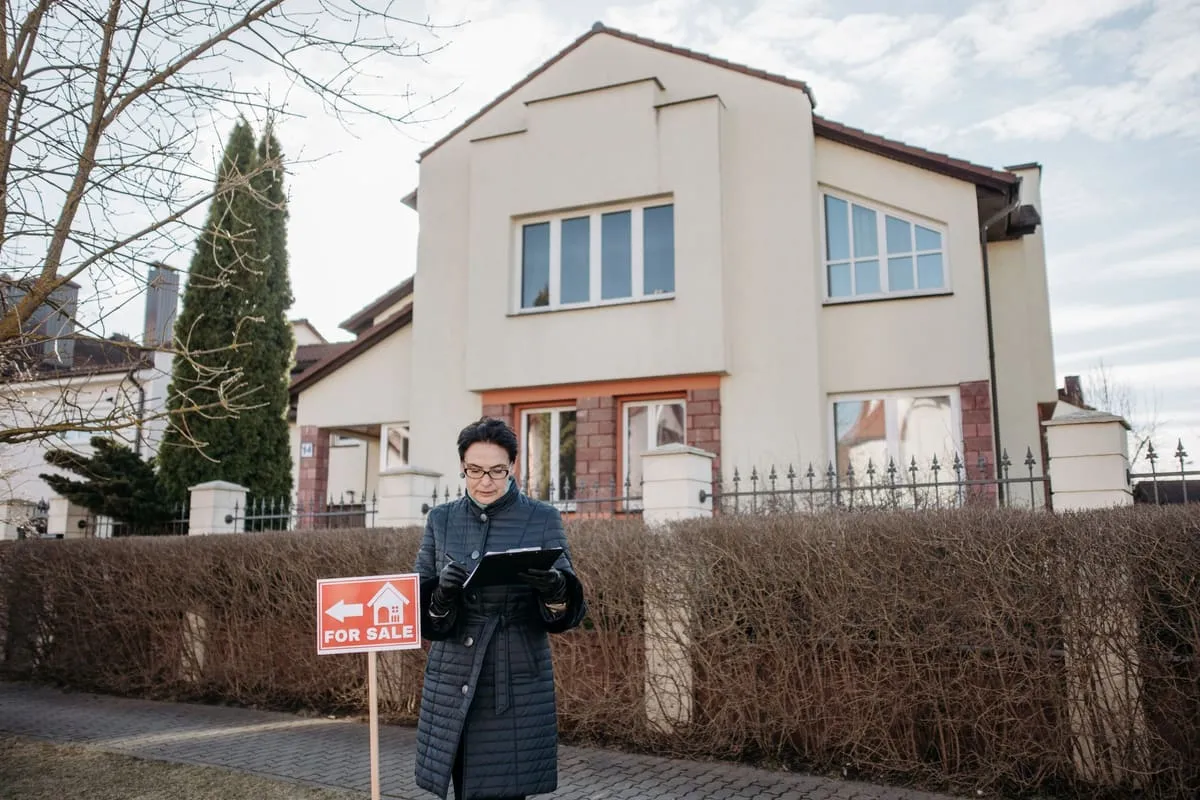
What a career changer brings is a network. For established agents, repeat business is a big share: NAR found the typical member earned 28% of their business from past clients and customers in 2025 (NAR). A new agent has no past clients yet, so the early version of that is the people who already know you, and twenty years of colleagues, neighbors, and school parents is a head start a 23-year-old doesn’t have. What a career changer gives up is a paycheck, and that matters more at 45 with a mortgage than at 25 with roommates.
That tension runs through the discussions people start before making this move. A 39-year-old’s r/RealEstate thread, “Starting a career at 39”, drew more than 120 replies, and a Facebook post in a real estate mastermind group asking whether 37 is too late drew more than 70. Both ask about age. NAR’s numbers suggest the harder question is money: the median new member is 45, and the first two years are the lean ones. For the broader decision, our guides to career change at 30, career change at 40, and career change at 50 walk through how age, savings, and risk interact.
A practical order of operations:
- Look up your state’s requirements on the commission’s own site: hours, post-licensing, fees.
- Interview three brokers before you enroll. Their split, fees, and training tell you whether the math can work for you. Choosing the cheapest course and then the first broker who says yes gets the priorities backwards: the course matters least of any decision here.
- Price year one, not just the license. Add each broker’s recurring fees to your local association and MLS dues.
- Fund the ramp. Our recommendation is at least six months of living expenses saved before you rely on commission income; that’s a planning rule, not a statistic. Starting part-time while you keep your current job is the lower-risk version, if your broker allows it. Our decade-by-decade career change guide covers the savings side in more depth.
- Tell your network early. People who already trust you are the most natural first clients.
Frequently Asked Questions
How hard is it to become a real estate agent?
The licensing requirements are short: a state-approved course of 40 to 180 hours depending on the state, and one multiple-choice exam. Making a living is the hard part. NAR’s members with two years or less of experience earned a median of $8,000 in 2025, because commission income takes time to build.
How many real estate agents fail in the first year?
There’s no reliable national figure. You’ll see claims that 75% to 90% of new agents fail, but we couldn’t trace those numbers to any study, and we found no public dataset that tracks agents leaving the business. What is published is the income gap: a median of $8,000 for Realtors with two years or less of experience against $59,200 for all members (NAR, 2025).
Is 40 too old to become a real estate agent?
No. The median age of NAR members with two years or less of experience is 45, according to NAR’s 2026 Member Profile, so a 40-year-old is younger than the typical new Realtor. A long-built personal network is an advantage in a business that runs on referrals and repeat clients.
How much would a real estate agent make on a $300,000 house?
It depends on the negotiated commission and your broker’s split, both of which vary. As an illustration only: an assumed 2.5% on a $300,000 sale is $7,500 to the brokerage, and at an assumed 70/30 split you’d keep $5,250 before expenses and taxes.
Can you be a real estate agent part time?
Yes. We found no full-time requirement in any of the five states’ rules covered here, but your broker has to allow it, and some don’t. Part-time agents usually build a client base more slowly, so ask every broker you interview about their part-time policy.
How do you become a Realtor?
Get your state real estate license first, then join a local REALTOR association, which also makes you a member of your state association and NAR. The Realtor title is a membership mark, not a separate license, and it comes with annual dues and NAR’s Code of Ethics.
Is Real Estate Your Next Career?
Real estate is one of the fastest second careers to enter and one of the slowest to pay. The steps are short and the rules are public. The parts that decide whether it works for you are the ones no course covers:
- Your state’s requirements, from 40 hours in Massachusetts to 180 in Texas, plus any post-licensing.
- Your broker, whose split, fees, and training shape your first year more than any school.
- Your runway, because the median Realtor in their first two years grossed $8,000 in 2025.
- Your network, which is the one asset a career changer brings that a new graduate doesn’t.
If you have the savings and the network, the license is a few months away. If you’d rather earn a wage while you train, compare the electrician path, or see our full second-career comparison, which sets real estate against ten other paths on cost, timeline, and pay.