
Guide
How to Become a Dental Hygienist (Career Change Guide)
How to become a dental hygienist: the four licensing steps, what school actually costs, and why getting a program seat is the hardest part.
September 11, 2026 · 19 min read
On This Page
- How to Become a Dental Hygienist: The Four Steps
- The Part Nobody Tells You: Getting a Seat Is the Hard Step
- What Dental Hygiene School Actually Costs
- How Long Does It Take to Become a Dental Hygienist?
- What Dental Hygienists Earn, and Why the Shortage Is Not Raising Pay
- Before You Commit: Why People Leave This Job
- Is This a Good Career Change at 40 or 50?
- Common Mistakes Career Changers Make
- Frequently Asked Questions
- So, Is This Your Path?
Search “how to become a dental hygienist” and every result gives you the same four steps: finish an accredited program, pass the national board, pass a state clinical exam, get licensed. That sequence is correct. It is also the least useful part of the answer, because it presents step one as though enrolling were paperwork.
It is not paperwork. It is the hardest gate in the whole process, and it is the one thing almost nobody writing about this career explains. Wake Tech’s dental hygiene program in North Carolina puts the problem in a single sentence on its own admissions page: the program accepts 24 students each fall and receives 80 to 160 applications each year to fill them.
This guide covers the four steps, what the credential actually costs, how long it takes when you count the parts the brochures leave out, what the job pays according to current federal data, and an honest read on why a national shortage is not doing what you would expect to wages. For how this path compares with other options on cost and timeline, see our overview of second career ideas.
Key Takeaways
- Four steps: graduate from a program accredited by the Commission on Dental Accreditation (CODA), pass the National Board Dental Hygiene Examination, pass a state or regional clinical exam, and get licensed. Every state requires a license.
- Median pay is $98,100 a year (BLS Occupational Outlook Handbook, Dental Hygienists, May 2025), about 40% above the $69,770 median for all occupations, and it is one of the few jobs at that level whose typical entry credential is an associate degree.
- Average tuition and fees run $22,692 for an associate program and $36,382 for a bachelor’s (ADEA), before instruments, board fees, and licensure.
- Admission is the bottleneck. Programs are capped by clinical chairs and faculty ratios, so cohorts commonly run 16 to 24 seats and applicants routinely outnumber places several times over.
- There is a genuine national shortage, but it is not pushing pay up. ADA Health Policy Institute finds inflation-adjusted wages for dental office staff have fallen, while pay in medical offices and the wider private sector rose.
How to Become a Dental Hygienist: The Four Steps
To become a registered dental hygienist (RDH) you must graduate from a CODA-accredited program, pass a written national board exam, pass a clinical exam, and obtain a license from your state board. There is no route around the accredited program, and no state licenses hygienists without one.
| Step | What it is | Typical duration | Who administers it |
|---|---|---|---|
| 1. Accredited program | Associate or bachelor’s degree in dental hygiene, including supervised patient care | 2 to 3 years (associate), 4 years (bachelor’s) | Community colleges, technical colleges, and universities accredited by CODA |
| 2. National board | National Board Dental Hygiene Examination (NBDHE), a written exam | One test date, after coursework | Joint Commission on National Dental Examinations |
| 3. Clinical exam | A hands-on examination on live patients or manikins | One test date | A state or regional testing agency |
| 4. Licensure | Application to your state board, then continuing education to renew | Weeks to months to process | Your state board of dentistry |
Accreditation is the part to get right first. The American Dental Association counts more than 300 accredited dental hygiene education programs in community colleges, technical colleges, dental schools, and universities. You can check any specific program’s status in CODA’s own directory of accredited programs before you apply. Graduating from an accredited program is a prerequisite for both the board exams and state licensure. A program without CODA accreditation does not lead to a license, which makes enrolling in one the single most expensive mistake available in this field.
The associate degree is the standard entry credential and the one most career changers take. Both routes end at the same RDH license, so the bachelor’s is worth the extra years mainly if you already expect to move out of full-time chairside work later, into teaching, public health, research, or industry. If your goal is to start earning as a hygienist as soon as possible, which is usually the goal at 40 or 50, the associate degree is the shorter and cheaper path to the identical credential.
Dental Hygienist Requirements by State
The four steps above are the national pattern. Dental hygienist requirements vary by state on top of that pattern, and the variation is wider than most applicants expect. States differ on how much dentist supervision is required, which procedures you are permitted to perform, how often you renew and how many continuing-education hours that takes, and whether you must pass a state law and ethics exam in addition to the national board.
Washington shows how much a single state can add. Alongside CODA accreditation and the national board, it requires an approved clinical examination, a Washington State Drug and Law Examination, and expanded-function education in anesthesia, nitrous oxide, and restorative procedures. None of that appears in a generic four-step guide. Check your own state board’s published requirements before you choose a program, not after you enroll.
The Part Nobody Tells You: Getting a Seat Is the Hard Step
The binding constraint on this career is not the exams or the tuition. It is that accredited programs physically cannot expand, so admission is competitive in a way that catches career changers off guard.
A hygiene program’s class size is limited by how many clinical operatories it has, how many faculty it can staff to supervise chairside instruction, and how many patients it can bring through its teaching clinic. None of that scales the way a lecture course does. Treat that as the structural explanation rather than a published figure. What is documented is the result, and the result is what matters to you as an applicant. Look at what individual programs publish about their own cohorts:
| Program | Seats per year | What the program says |
|---|---|---|
| Wake Tech (NC) | 24 each fall | A “limited-enrollment program,” admitted by a “competitive, point-based admission process,” with 80 to 160 applications a year |
| St. Cloud Technical & Community College (MN) | 16 each fall | “Highly competitive”; the college “will not be able to accept all applicants that meet the minimum admission standards,” and there is no wait list |
| Rochester Community and Technical College (MN) | 16 positions, 20 maximum | “Receives many applications annually for the 16 available positions thus, admission is competitive” |
Prerequisites are where the competition actually gets decided, and the bar is higher than most people expect. St. Cloud requires a grade of C or better in prerequisite coursework and a cumulative prerequisite GPA of 3.5 or above, with all prerequisites finished before you may apply. Rochester sets an overall GPA floor plus a separate science GPA calculated only from attempts in the most recent five years. The science sequence itself, typically anatomy and physiology, microbiology, and chemistry, is two or three semesters of work before you are even eligible.
The national picture confirms this is structural rather than local. The ADA Health Policy Institute reports that first-year enrollment in hygiene programs rose 16% between 2020 and 2025, and that 2025 produced the highest number of dental hygiene graduates the country has ever seen. Despite that, HPI notes the total number of staff working in U.S. dental offices has been essentially flat for at least a year and a half. The pipeline is running at record output and still not growing the workforce.
The practical consequence for your plan: most cohorts admit once a year, so missing a cycle costs twelve months. Work backward from the application deadline, not forward from today.
What Dental Hygiene School Actually Costs
Average tuition and fees come to $22,692 for an associate degree and $36,382 for a bachelor’s, according to figures the American Dental Education Association publishes for in-state and in-district students. A master’s, relevant only if you are aiming at teaching or research later, averages $30,421.
Tuition is not the whole bill. ADEA’s own list of costs to budget for includes books and supplies, transportation, medical insurance, and, distinctively for this field, dental hygiene instrument rentals and purchases. Add board exam fees and a state licensure application on top. ADEA does not attach a data year to these averages, so treat them as a planning range rather than a current-year quote, and ask any program you are seriously considering for its own total cost of attendance.
Two things soften the number. Community college programs commonly sit below the four-year average, and the associate degree is the standard route into the job rather than a lesser version of it. Compared with most paths to a six-figure-adjacent salary, roughly $23,000 and an associate degree is a genuinely low price of entry.
How Long Does It Take to Become a Dental Hygienist?
Program length is two to three years for an associate degree. The honest answer to “how long from deciding to working” is longer than that for most career changers, because two stages sit in front of the program and one sits behind it.
- Prerequisites: two to three semesters. Anatomy and physiology, microbiology, and chemistry, at the grades competitive admission requires. If you have no recent college science, this is where your clock actually starts.
- The application cycle: up to twelve months. Most cohorts admit once a year. Applying late means waiting a full year, not a semester.
- The program: two to three years. Classroom, laboratory, and supervised patient care.
- Boards and licensure: weeks to a few months. Scheduling the NBDHE and a clinical exam, then state processing.
Counted properly, a career changer starting without college science credit should plan on three to four years, not two. That is the number to run your finances against. Our comparison of second career ideas lists dental hygiene at about 30 months, which reflects program time specifically. The difference between that figure and the one here is the prerequisite and application runway.
What Dental Hygienists Earn, and Why the Shortage Is Not Raising Pay
The median dental hygienist earned $98,100 in May 2025, according to the BLS Occupational Outlook Handbook. The middle of the distribution is strong and the floor is unusually high: the lowest-paid 10% still earned more than $74,880, which is above the $69,770 median for all occupations in the United States. The top 10% earned more than $126,050. The same BLS page puts employment at 225,300 in 2025, projects 8% growth through 2035, and expects about 15,000 openings a year.
Now the part the rest of the internet leaves out. There is a real, well-documented shortage: ADA Health Policy Institute data cited in an April 2026 ADHA position statement found only 60% of dentists report adequate hygiene staffing, and 91% of those actively recruiting rate it very or extremely challenging, a picture that has held for three years.
You would expect scarcity like that to bid wages up sharply. It has not. HPI’s own analysis finds that after adjusting for inflation, average wages for dental office staff including hygienists are actually down from a few years ago, while wages for medical office staff and for private-sector workers generally rose. HPI attributes this to what it calls a fiscal squeeze: the prices dental practices pay for equipment, supplies, and technology are rising faster than what insurers reimburse for care, compressing the margin owners would need to fund raises.
The useful conclusion is not that the pay is bad, because it plainly is not. It is that you should model your decision on today’s wage rather than on an assumption that the shortage will keep pushing it higher. What the shortage reliably buys you is leverage on getting hired and on negotiating schedule and working conditions, which, as the next section explains, is what actually determines how long people last.
Before You Commit: Why People Leave This Job
A two-to-four-year commitment deserves an honest look at why people exit, and the reasons are documented well enough that you can check for most of them before you accept an offer.
The 2026 GoTu State of Work Report, cited in the same ADHA position statement, found burnout reported by 60.6% of dental hygienists, with the leading causes given as workload at 65.7% and toxic office culture at 62.4%. Pay and benefits were a common complaint across dental staff generally rather than hygienists specifically, with most respondents reporting no raise in the previous two years and a substantial share reporting no benefits at all. GoTu is a dental staffing company, so this is an industry survey rather than a government data set. Read it as a strong signal about working conditions, not as a census.
Two findings complicate the doom narrative in a way worth sitting with. First, 62% of hygienists said greater clinical autonomy would make them more likely to stay, which points at how practices are run rather than at the work itself. Second, 82.8% of respondents said they plan to remain in dentistry for at least another decade. Dissatisfaction is widespread; wholesale abandonment of the field is not.
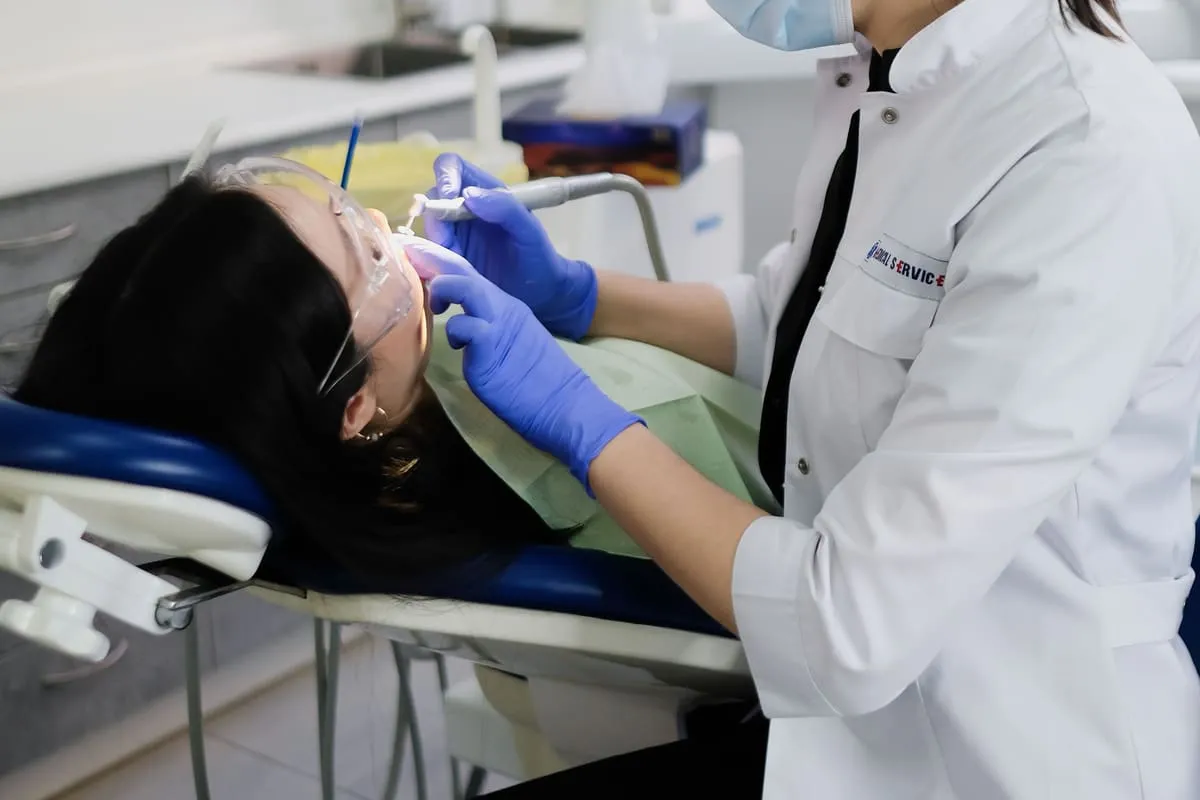
The physical toll is the part that shows up constantly in practitioner discussion and almost never in career guides. Hygienists hold static, slightly twisted postures for hours while doing precise work with small instruments, which is why workload ranked as the leading burnout cause in the survey above. Practitioners discuss it at length among themselves: an r/DentalHygiene thread titled “Why do you think so many hygienists eventually consider leaving the field?” drew roughly 30 replies. Treat any single thread as anecdote rather than data.
The actionable version: the questions that predict career length are not about salary. Ask how many minutes are scheduled per adult cleaning, whether the practice provides assisted hygiene, who maintains and sharpens instruments, and what happens when the schedule runs late. An office that answers those well is a different job from one that does not, at the same hourly rate.
Is This a Good Career Change at 40 or 50?
Yes, with two caveats that are specific rather than generic. There is no age limit on admission or licensure, and the ADA explicitly identifies career changers as a fit for this field, noting that flexible scheduling benefits students with family responsibilities as well as those working while they learn.
The arithmetic holds up well at midlife. The credential costs about a quarter of what a single year at the median hygienist wage pays, and the shortage means the hiring end is about as favorable as it gets. Be honest about the other side of that ledger, though: the real cost of switching is not just tuition but the three to four years of reduced or foregone income while you complete prerequisites and clinical semesters. Run the comparison against what you earn now, not against zero. On Reddit, someone asking whether they would be crazy to go to hygiene school at 40 drew the same reply repeatedly from working hygienists: school was hard but doable, and finding a job afterward was not the problem.
The first caveat is physical. Everything in the previous section compounds with age, and a body starting chairside work at 50 has fewer years of margin than one starting at 22. That argues for choosing an employer on working conditions, not for avoiding the career.
The second is the runway. Starting at 55 leaves roughly a decade to recover the investment and build retirement savings, which still works but leaves less room for a mid-course correction. If you are weighing this against other options, our guides to a career change at 40 and a career change at 50 cover the financial-runway math in more detail, and how to become a paralegal covers a comparable credential-gated path with a shorter and cheaper entry.
Common Mistakes Career Changers Make
- Enrolling somewhere that is not CODA-accredited. The most expensive error available here. No accreditation means no board eligibility and no license, and the tuition is not refundable against that.
- Treating admission as a formality. The seat is the constraint. Starting prerequisites without checking a specific program’s deadline, GPA thresholds, and science-recency rules is how people lose a year.
- Assuming a dental assistant job converts into hygiene. It does not. Scope of practice is set by state law, not by your employer. Florida’s statute is representative: only dental hygienists may be delegated the task of removing calculus deposits, accretions, and stains from the teeth and gingival sulcus, or performing root planing and curettage. Assisting is a real job and useful exposure, but it is a separate credential, not a rung on the same ladder.
- Budgeting tuition only. Instruments, books, board fees, and licensure applications land on top, and clinical semesters usually cut into the hours you can work.
- Choosing a program on price alone. Ask for board exam pass rates, clinical hours, and where recent graduates were hired. Those separate programs far more than a few thousand dollars of tuition does.
If you’re weighing hygiene against nursing, our guide on how to become a nurse compares the accelerated, associate, and bachelor’s routes and what each does to your income.
Frequently Asked Questions
How long does it take to become a dental hygienist?
Two to three years for an accredited associate program, or four for a bachelor’s. Counting prerequisite science coursework and the once-a-year application cycle, a career changer without recent college credit should realistically plan on three to four years from decision to license.
Is it hard to become a dental hygienist?
The exams are passable with preparation. The genuinely hard parts are getting admitted, since programs like Wake Tech field 80 to 160 applications for 24 seats, and carrying prerequisite science coursework at the GPA competitive admission demands, which at some programs means a 3.5 or better.
Who gets paid more, a registered nurse or a dental hygienist?
Dental hygienists, but only just. BLS puts the median dental hygienist at $98,100 and the median registered nurse at $97,550, both as of May 2025. A $550 gap on a $98,000 salary is well inside the range these figures move in when BLS revises them each year, so treat the two as effectively equal on pay and decide on other grounds. The real difference is the entry credential: an associate degree for hygiene, versus an associate or bachelor’s degree for nursing (BLS lists a bachelor’s as typical for RNs, but licensed graduates of associate programs qualify for entry-level staff nurse jobs; see our how to become a nurse guide). Nursing is also a far larger field, with about 180,800 annual openings against roughly 15,000 in hygiene.
How much does it cost to become a dental hygienist?
Average tuition and fees are $22,692 for an associate program and $36,382 for a bachelor’s, per ADEA, for in-state and in-district students. Budget separately for instruments, books, board exam fees, and state licensure.
Can you become a dental hygienist without a degree?
No. Every state requires a license, and licensure requires graduating from a CODA-accredited program. There is no apprenticeship, online-only, or on-the-job route to an RDH credential, and no state recognizes one.
Is program admission or the licensing exam the harder part?
Admission, by a wide margin. Accredited programs cannot expand, because class size is capped by the number of clinical chairs, faculty supervision ratios, and teaching-clinic patient volume. Wake Tech receives 80 to 160 applications a year for 24 seats, and St. Cloud requires a 3.5 prerequisite GPA just to be considered. The board exams are passable with preparation. Getting a seat is the genuine bottleneck.
Does the dental hygienist shortage mean pay is going up?
No, and this is the most common misconception about the field. The shortage is real: only 60% of dentists report adequate hygiene staffing. But ADA Health Policy Institute analysis finds that inflation-adjusted wages for dental office staff have fallen compared with a few years ago, while pay in medical offices and the wider private sector rose. Practices face rising equipment and supply costs against flat insurance reimbursement, which leaves little margin to fund raises. Expect the shortage to give you leverage on hiring and on schedule, not on wage growth.
So, Is This Your Path?
Dental hygiene is one of the strongest pay-to-training ratios available to a career changer: about $23,000 and an associate degree for a job with a $98,100 median and a floor above what most American workers earn. The demand is real and it will make the hiring end of this easy.
Plan around the two things the standard guides skip. Getting a seat is competitive and slow, so work backward from a specific program’s deadline and prerequisite rules rather than forward from today. And choose the practice you join on appointment length, assisted hygiene, and equipment support rather than on the hourly rate, because those are what determine whether this is a career or a few hard years.
If you are still comparing options, our full second-career comparison sets this path against ten others on cost and timeline, and how to become a therapist covers the other long-licensure healthcare route on this site.